![EakLab [Official]](https://www.eaklab.com/wp-content/uploads/2026/09/EakLab-Logo-Latest.png)

What Is SEO? Search Engine Optimisation Explained
Introduction to SEO
Search Engine Optimization (SEO) is the art and science of enhancing a website to improve its visibility on search engine results pages (SERPs). When users search for information, products, or services online, search engines like Google, Bing, and Yahoo use complex algorithms to determine the most relevant and authoritative results. SEO involves optimizing various elements of a website to align with these algorithms, thereby increasing the likelihood of ranking higher in search results.
SEO encompasses a range of strategies, from refining website content and structure to building authoritative backlinks and ensuring technical compliance with search engine guidelines. Its ultimate goal is to attract organic (non-paid) traffic, convert visitors into customers, and establish a strong online presence.
The Importance of SEO
In an era where digital presence is paramount, SEO plays a crucial role in determining the success of a website or online business. Here’s why SEO is indispensable:
1. Increased Visibility and Brand Awareness
High-ranking websites receive more visibility, leading to increased brand awareness. Users are more likely to trust and engage with brands that appear at the top of search results.
2. Organic Traffic Growth
SEO drives organic traffic, which is often more sustainable and cost-effective compared to paid advertising. Organic visitors are typically more interested and engaged, leading to higher conversion rates.
3. Credibility and Trust
Websites that rank well are perceived as more credible and trustworthy. Effective SEO practices, such as quality content and authoritative backlinks, enhance a site’s reputation.
4. User Experience Enhancement
SEO involves optimizing website elements that improve user experience, such as site speed, mobile-friendliness, and easy navigation. A positive user experience can lead to higher engagement and retention.
5. Competitive Advantage
Investing in SEO can give your business a competitive edge. A well-optimized website can outperform competitors in search rankings, attracting more potential customers.
6. Cost-Effectiveness
Compared to traditional and digital advertising, SEO offers a higher return on investment (ROI). Once established, organic rankings can sustain traffic without ongoing costs.
7. Local Reach
For businesses targeting local markets, SEO can help appear in local search results, driving foot traffic and local engagements.
8. Long-Term Strategy
While SEO requires consistent effort, its benefits are long-lasting. Unlike paid ads, which stop generating traffic once the budget is exhausted, SEO continues to drive traffic over time.
How Search Engines Work
To effectively optimize your website, it’s essential to understand how search engines operate. Here’s a simplified breakdown of the process:
1. Crawling
Search engines use automated bots, known as crawlers or spiders, to discover and scan new and updated content across the web. These crawlers navigate through links from one page to another, indexing content for later retrieval.
2. Indexing
After crawling, the search engine organizes and stores the information in a vast database called the index. The index categorizes content based on various factors, including keywords, relevance, and authority.
3. Ranking
When a user performs a search, the search engine queries its index to find the most relevant results. The ranking algorithm evaluates numerous factors, such as content quality, keyword relevance, user intent, backlinks, and site performance, to determine the order of results.
4. Serving Results
Finally, the search engine presents the ranked results to the user, typically displaying the most relevant and authoritative pages at the top of the SERPs.
Key Components of SEO
SEO is a multifaceted discipline comprising several key components, each contributing to a website’s overall optimization and performance.
On-Page SEO
On-Page SEO involves optimizing individual web pages to improve their search engine rankings and attract relevant traffic. Key elements include:
-
Content Quality: Creating valuable, informative, and engaging content that meets the needs of your target audience.
-
Keyword Optimization: Incorporating relevant keywords naturally within the content, headings, meta tags, and URLs.
-
Title Tags and Meta Descriptions: Crafting compelling and descriptive titles and meta descriptions that accurately reflect the page’s content.
-
Header Tags (H1, H2, H3): Structuring content using header tags to enhance readability and SEO.
-
Internal Linking: Linking to other relevant pages within your website to improve navigation and distribute link equity.
-
Image Optimization: Using descriptive file names, alt tags, and compressing images to enhance load times and accessibility.
Off-Page SEO
Off-Page SEO refers to actions taken outside of your website to improve its authority and ranking. Key aspects include:
-
Backlinks: Acquiring high-quality, authoritative backlinks from reputable websites to signal trust and credibility.
-
Social Signals: Leveraging social media platforms to increase content visibility and engagement, indirectly influencing SEO.
-
Brand Mentions: Earning mentions of your brand across the web, even without direct links, to enhance online presence.
Technical SEO
Technical SEO focuses on optimizing the technical aspects of your website to ensure that search engines can crawl, index, and rank it effectively. Key elements include:
-
Site Speed: Enhancing page load times to improve user experience and reduce bounce rates.
-
Mobile-Friendliness: Ensuring your website is responsive and provides a seamless experience across all devices.
-
XML Sitemaps: Creating and submitting sitemaps to help search engines understand your site’s structure and content.
-
Robots.txt: Managing crawler access to your website’s pages through the robots.txt file.
-
SSL and Security: Implementing HTTPS to secure your website and build user trust.
-
Structured Data: Using schema markup to provide additional context to search engines, enhancing rich snippets and search visibility.
Keyword Research
Keyword research is the foundation of effective SEO. It involves identifying the terms and phrases that your target audience uses when searching for information, products, or services related to your business.
Steps for Keyword Research
-
Brainstorm Seed Keywords:
-
Start with broad terms related to your niche or industry. These seed keywords form the basis for more specific keyword ideas.
-
-
Use Keyword Research Tools:
-
Utilize tools like Google Keyword Planner, SEMrush, Ahrefs, and Moz Keyword Explorer to discover additional keywords, assess search volumes, and analyze competition levels.
-
-
Analyze Competitors:
-
Examine the keywords your competitors are targeting. This can uncover opportunities and gaps in your own keyword strategy.
-
-
Focus on Long-Tail Keywords:
-
Long-tail keywords are longer, more specific phrases that typically have lower competition and higher conversion rates. For example, instead of targeting “shoes,” focus on “comfortable running shoes for flat feet.”
-
-
Assess Keyword Intent:
-
Understand the intent behind keywords—whether users are looking to buy (commercial intent), seeking information (informational intent), or navigating to a specific site (navigational intent).
-
-
Group Similar Keywords:
-
Organize keywords into related groups to create more targeted ad groups and improve relevance.
-
Tips for Effective Keyword Research
-
Balance Volume and Competition: Aim for keywords with sufficient search volume but manageable competition.
-
Focus on Intent: Choose keywords that reflect the user’s intent to buy or engage with your product.
-
Regularly Update: Continuously refine your keyword list based on performance data and changing trends.
-
Use LSI Keywords: Latent Semantic Indexing (LSI) keywords are related terms that help search engines understand the context of your content.
Content Creation and Optimization
Content is the lifeblood of SEO. High-quality, relevant content not only attracts visitors but also engages them, encouraging longer site visits and higher conversion rates.
Creating Quality Content
-
Understand Your Audience:
-
Know the needs, preferences, and pain points of your target audience to create content that resonates with them.
-
-
Provide Value:
-
Offer informative, actionable, and engaging content that solves problems or answers questions your audience has.
-
-
Maintain Originality:
-
Ensure your content is unique and offers a fresh perspective. Avoid duplicating content from other sources.
-
-
Use Multimedia:
-
Incorporate images, videos, infographics, and other multimedia elements to make your content more engaging and easier to understand.
-
-
Update Regularly:
-
Keep your content up-to-date to maintain its relevance and accuracy.
-
Optimizing Content for SEO
-
Incorporate Target Keywords:
-
Use primary and secondary keywords naturally within your content, including in the title, headings, and body.
-
-
Optimize Title Tags and Meta Descriptions:
-
Create compelling and descriptive titles and meta descriptions that include relevant keywords and entice users to click.
-
-
Use Header Tags Effectively:
-
Structure your content using H1, H2, H3 tags to improve readability and help search engines understand the hierarchy of information.
-
-
Optimize Images:
-
Use descriptive file names and alt tags for images to improve accessibility and provide additional context for search engines.
-
-
Improve Readability:
-
Write clear, concise, and well-organized content. Use bullet points, short paragraphs, and subheadings to enhance readability.
-
-
Internal Linking:
-
Link to other relevant pages within your website to improve navigation and distribute link equity.
-
-
External Linking:
-
Link to authoritative external sources to provide additional value and context for your readers.
-
Content Types for SEO
-
Blog Posts: Regularly updated articles that address various topics related to your niche.
-
Guides and Tutorials: In-depth resources that provide step-by-step instructions on specific subjects.
-
Product Reviews: Detailed evaluations of products or services, highlighting their features, benefits, and drawbacks.
-
Case Studies: Real-life examples showcasing how your products or services have benefited customers.
-
Infographics: Visually appealing representations of data or information that are easy to share and understand.
-
Videos: Engaging video content that can explain complex topics, demonstrate products, or tell compelling stories.
Link Building
Link building is a critical aspect of off-page SEO that involves acquiring high-quality backlinks from other websites to your own. Backlinks serve as endorsements, signaling to search engines that your content is valuable and trustworthy.
Why Link Building Matters
-
Authority and Trust: Backlinks from reputable sites enhance your website’s authority and credibility.
-
Improved Rankings: Quality backlinks are a significant ranking factor, helping your site rank higher in SERPs.
-
Referral Traffic: Backlinks can drive targeted traffic from referring websites to your own.
-
Indexing: Search engine crawlers discover new content through backlinks, aiding in faster indexing.
Effective Link Building Strategies
-
Create High-Quality Content:
-
Produce valuable, informative, and engaging content that others naturally want to link to.
-
-
Guest Blogging:
-
Write articles for reputable blogs in your industry, including backlinks to your site within the content or author bio.
-
-
Broken Link Building:
-
Identify broken links on other websites and offer your content as a replacement, benefiting both parties.
-
-
Skyscraper Technique:
-
Find popular content in your niche, create a superior version, and reach out to sites that linked to the original to link to your improved content.
-
-
Resource Link Building:
-
Create valuable resources like guides, tools, or infographics and promote them to websites that compile such resources.
-
-
Influencer Outreach:
-
Connect with influencers and thought leaders in your industry to collaborate and earn backlinks through mentions or endorsements.
-
-
Social Media Promotion:
-
Share your content on social media platforms to increase its visibility and the likelihood of earning backlinks.
-
-
Local Citations:
-
Ensure your business is listed accurately on local directories and citation sites, which can provide valuable backlinks.
-
Avoiding Black Hat Techniques
While link building can significantly boost your SEO, it’s essential to avoid unethical practices that can lead to penalties:
-
Buying Links: Purchasing backlinks violates Google’s guidelines and can result in severe penalties.
-
Link Farms: Engaging in link exchanges with low-quality sites or participating in link farms can harm your site’s reputation.
-
Spammy Backlinks: Acquiring backlinks from irrelevant or low-authority sites can negatively impact your SEO.
Focus on earning links organically through quality content and ethical outreach methods to ensure long-term SEO success.
Technical SEO Elements
Technical SEO ensures that your website meets the technical requirements of search engines, enhancing its ability to crawl, index, and rank your site effectively. Here are the key technical elements to focus on:
Site Speed
Site speed is a crucial ranking factor and directly impacts user experience. Faster websites provide a better user experience, leading to lower bounce rates and higher engagement.
Optimization Tips:
-
Compress Images: Use tools like TinyPNG to reduce image file sizes without compromising quality.
-
Minimize HTTP Requests: Reduce the number of elements on your page to decrease load times.
-
Enable Browser Caching: Allow browsers to store static resources, speeding up page loads for repeat visitors.
-
Use a Content Delivery Network (CDN): Distribute your content across multiple servers to improve load times for users worldwide.
-
Optimize Code: Minify CSS, JavaScript, and HTML to reduce file sizes and improve load speed.
Mobile-Friendliness
With the majority of internet traffic coming from mobile devices, ensuring your website is mobile-friendly is essential for both user experience and SEO.
Optimization Tips:
-
Responsive Design: Implement a responsive design that adapts to various screen sizes and devices.
-
Simplify Navigation: Ensure that menus and navigation elements are easy to use on smaller screens.
-
Optimize Touch Elements: Make buttons and links large enough to be easily tapped on mobile devices.
-
Avoid Flash: Use modern web technologies instead of Flash, which is not supported on many mobile devices.
SSL and Security
SSL (Secure Sockets Layer) encrypts data transmitted between a user’s browser and your website, enhancing security and trust.
Optimization Tips:
-
Install an SSL Certificate: Ensure your website uses HTTPS rather than HTTP.
-
Regularly Update Software: Keep your website’s CMS, plugins, and themes up to date to prevent security vulnerabilities.
-
Implement Security Measures: Use firewalls, malware scanners, and other security tools to protect your site from threats.
Structured Data
Structured data helps search engines understand the context of your content, enabling rich snippets and enhanced search results.
Optimization Tips:
-
Use Schema Markup: Implement schema.org markup to provide detailed information about your content.
-
Test with Google’s Tools: Use the Rich Results Test and Schema Markup Validator to ensure your structured data is correctly implemented.
-
Focus on Relevant Types: Utilize structured data types relevant to your content, such as articles, products, events, and reviews.
Crawlability and Indexing
Ensuring that search engines can effectively crawl and index your website is fundamental to SEO success.
Optimization Tips:
-
Create and Submit an XML Sitemap: Provide a comprehensive sitemap to help search engines discover and index your pages.
-
Use Robots.txt Wisely: Manage crawler access to your site’s pages using the robots.txt file, blocking irrelevant or duplicate content.
-
Fix Broken Links: Regularly check for and fix broken links to maintain a healthy site structure.
-
Avoid Duplicate Content: Ensure each page has unique content to prevent confusion and potential penalties from search engines.
Local SEO
Local SEO focuses on optimizing your online presence to attract more business from relevant local searches. It’s particularly important for businesses that operate on a regional, as opposed to a national, level.
Importance of Local SEO
With the rise of mobile searches, many users look for products or services near them. Local SEO helps your business appear in these searches, driving foot traffic and local engagements.
Key Strategies for Local SEO
-
Google My Business (GMB):
-
Claim and Verify Your GMB Listing: Ensure your business information is accurate and complete.
-
Optimize Your Profile: Add high-quality photos, business hours, contact information, and a detailed business description.
-
Encourage Reviews: Solicit positive reviews from satisfied customers and respond to reviews to enhance engagement.
-
-
Local Keywords:
-
Incorporate Geo-Specific Keywords: Use keywords that include your city, region, or neighborhood to target local searches.
-
Optimize Content for Local Intent: Create content that addresses local events, news, or activities related to your business.
-
-
Local Citations:
-
Ensure NAP Consistency: Your business’s Name, Address, and Phone number should be consistent across all online directories and platforms.
-
List on Local Directories: Submit your business to reputable local directories like Yelp, Yellow Pages, and industry-specific directories.
-
-
Localized Content:
-
Create Location-Specific Pages: Develop dedicated pages for each location if your business operates in multiple areas.
-
Engage with the Local Community: Share local news, events, and stories to connect with your audience.
-
-
Mobile Optimization:
-
Ensure Mobile-Friendliness: Many local searches are conducted on mobile devices, so your website must be optimized for mobile.
-
Fast Loading Speed: A fast-loading mobile site improves user experience and rankings.
-
-
Local Link Building:
-
Partner with Local Businesses: Collaborate with other local businesses for mutual backlinking opportunities.
-
Sponsor Local Events: Gain backlinks and local exposure by sponsoring community events or charities.
-
Benefits of Local SEO
-
Increased Local Visibility: Appear prominently in local search results, attracting nearby customers.
-
Higher Conversion Rates: Local searches often have higher conversion intent, leading to more sales or leads.
-
Competitive Advantage: Stand out from competitors by dominating local search results.
-
Cost-Effective Marketing: Local SEO is often more affordable and provides a higher ROI compared to traditional advertising.
SEO Tools and Resources
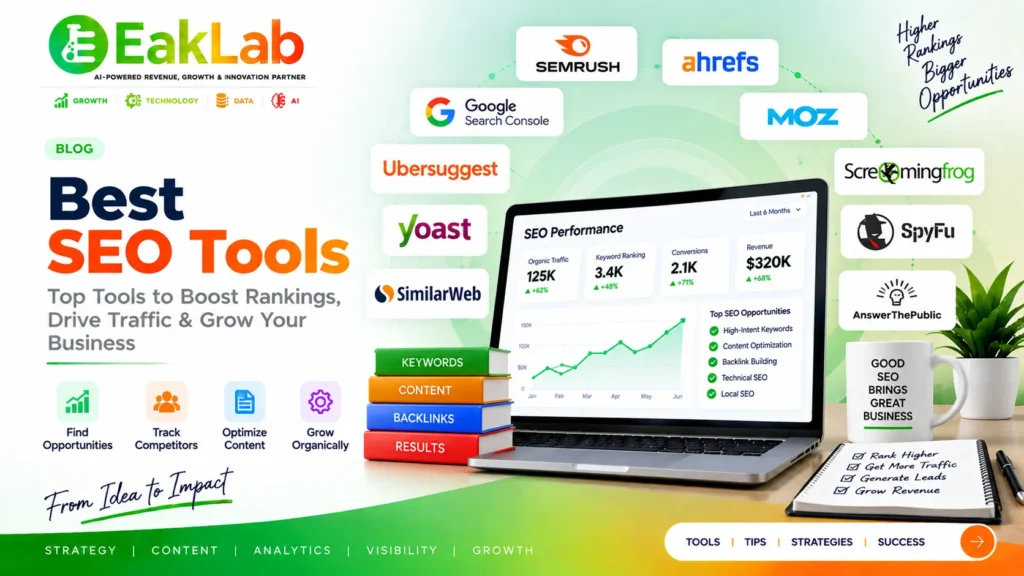
Leveraging the right tools and resources can significantly enhance your SEO efforts, providing valuable insights, automating tasks, and tracking performance.
Essential SEO Tools
-
Google Analytics
-
Overview: Tracks website traffic, user behavior, and conversion metrics.
-
Benefits: Provides detailed insights into your audience and the effectiveness of your SEO strategies.
-
-
Google Search Console
-
Overview: Monitors your website’s presence in Google search results.
-
Benefits: Identifies issues affecting your site’s performance, such as crawl errors, and provides data on search queries and rankings.
-
-
Keyword Research Tools
-
Google Keyword Planner: Discover new keywords and see estimates of their search volume.
-
SEMrush: Comprehensive tool for keyword research, competitor analysis, and tracking rankings.
-
Ahrefs: Offers extensive keyword data, backlink analysis, and site audits.
-
-
On-Page SEO Tools
-
Yoast SEO (for WordPress): Helps optimize content for SEO with real-time analysis and suggestions.
-
Screaming Frog SEO Spider: Crawls websites to identify on-page SEO issues like broken links and duplicate content.
-
-
Backlink Analysis Tools
-
Moz Link Explorer: Analyzes your backlink profile and identifies opportunities for link building.
-
Majestic SEO: Provides detailed insights into backlinks and site authority.
-
-
Content Optimization Tools
-
Grammarly: Enhances content quality by checking grammar, spelling, and readability.
-
Hemingway Editor: Improves content readability by highlighting complex sentences and passive voice.
-
-
Technical SEO Tools
-
GTmetrix: Analyzes site speed and provides recommendations for improvement.
-
Pingdom: Monitors website performance and uptime.
-
-
Local SEO Tools
-
BrightLocal: Manages local listings, monitors reviews, and tracks local rankings.
-
Whitespark: Helps find local citation opportunities and manage online reviews.
-
Additional Resources
-
SEO Blogs and Forums:
-
Moz Blog: Offers comprehensive articles on all aspects of SEO.
-
Search Engine Journal: Provides the latest news and insights in the SEO industry.
-
Ahrefs Blog: Shares in-depth guides, case studies, and SEO tips.
-
-
Online Courses and Certifications:
-
Google’s SEO Starter Guide: Official guide from Google on SEO basics.
-
Coursera and Udemy: Platforms offering various SEO courses for different skill levels.
-
HubSpot Academy: Free courses on SEO and digital marketing.
-
-
Books:
-
“The Art of SEO” by Eric Enge, Stephan Spencer, and Jessie Stricchiola: A comprehensive guide covering all aspects of SEO.
-
“SEO 2023” by Adam Clarke: Updated strategies and techniques for effective SEO.
-
Emerging Trends in SEO
The SEO landscape is continually evolving, influenced by technological advancements, changing user behaviors, and updates to search engine algorithms. Staying abreast of these trends ensures that your SEO strategies remain effective and competitive.
1. Voice Search Optimization
With the rise of voice-activated devices like Amazon Alexa, Google Assistant, and Apple’s Siri, optimizing for voice search is becoming increasingly important.
Key Points:
-
Conversational Keywords: Focus on natural, long-tail keywords that mimic how people speak.
-
Featured Snippets: Aim to appear in featured snippets, as voice assistants often read these aloud.
-
Local SEO: Voice searches often have local intent, making local SEO even more crucial.
2. Mobile-First Indexing
Google predominantly uses the mobile version of a site for indexing and ranking. Ensuring your website is mobile-friendly is no longer optional but a necessity.
Key Points:
-
Responsive Design: Implement a design that adapts seamlessly to different screen sizes.
-
Mobile Speed: Optimize site speed for mobile users to enhance user experience and rankings.
-
User-Friendly Navigation: Simplify navigation for mobile users, ensuring easy access to important content.
3. Artificial Intelligence and Machine Learning
AI and machine learning are transforming SEO by enabling more personalized and efficient optimization strategies.
Key Points:
-
Google’s BERT Update: Understand natural language processing to create content that aligns with user intent.
-
AI-Powered Tools: Utilize AI-driven SEO tools for keyword research, content optimization, and predictive analytics.
-
Personalization: Tailor content and recommendations based on user behavior and preferences.
4. Core Web Vitals
Google introduced Core Web Vitals as part of its ranking criteria, focusing on user experience elements like loading speed, interactivity, and visual stability.
Key Points:
-
Largest Contentful Paint (LCP): Measures loading performance. Aim for LCP within 2.5 seconds.
-
First Input Delay (FID): Assesses interactivity. Strive for FID less than 100 milliseconds.
-
Cumulative Layout Shift (CLS): Evaluates visual stability. Keep CLS below 0.1.
5. E-A-T (Expertise, Authoritativeness, Trustworthiness)
Google emphasizes E-A-T as a critical factor for ranking, especially for YMYL (Your Money or Your Life) content like health, finance, and legal information.
Key Points:
-
Expert Content: Ensure content is written by knowledgeable authors.
-
Authoritativeness: Build authority through quality backlinks and reputable mentions.
-
Trustworthiness: Enhance site security, transparent policies, and positive user reviews.
6. Structured Data and Rich Snippets
Implementing structured data helps search engines understand your content better, enabling rich snippets that enhance search visibility.
Key Points:
-
Schema Markup: Use schema.org to provide detailed information about your content.
-
Rich Snippets: Aim for rich results like star ratings, images, and event details to increase CTR.
-
Local Business Markup: Implement local business schema to enhance local SEO efforts.
7. Video SEO
With the growing popularity of video content, optimizing videos for search engines is becoming essential.
Key Points:
-
Video Descriptions and Titles: Use relevant keywords in video titles and descriptions.
-
Transcriptions: Provide transcriptions to make video content more accessible and indexable.
-
Video Hosting: Host videos on platforms like YouTube, leveraging their search capabilities while optimizing your own site for embedded videos.
8. Semantic Search and Intent Optimization
Search engines are moving towards understanding the context and intent behind queries rather than just matching keywords.
Key Points:
-
Content Relevance: Focus on creating content that thoroughly addresses user intent.
-
LSI Keywords: Use Latent Semantic Indexing (LSI) keywords to provide context and depth to your content.
-
Topic Clusters: Organize content around central topics with interlinked supporting articles to demonstrate expertise.
9. Interactive and Engaging Content
Interactive content like quizzes, polls, and interactive infographics can enhance user engagement and dwell time, positively impacting SEO.
Key Points:
-
User Interaction: Encourage users to engage with your content, increasing time spent on site.
-
Shareability: Create content that users want to share, expanding your reach and earning potential backlinks.
-
Enhanced User Experience: Interactive elements make your site more enjoyable and informative.
10. Sustainability and Ethical SEO Practices
As awareness around digital ethics and sustainability grows, incorporating ethical SEO practices becomes increasingly important.
Key Points:
-
Transparency: Be clear about your SEO practices and avoid manipulative tactics.
-
User Privacy: Respect user data and comply with privacy regulations.
-
Sustainable Practices: Focus on creating long-term, valuable content rather than short-term gains.
Benefits of SEO
Investing in SEO offers numerous advantages that contribute to the overall success and growth of your online presence.
1. Increased Website Traffic
SEO drives organic traffic by improving your website’s visibility in search results. Higher rankings mean more clicks and visits, leading to increased opportunities for conversions.
2. Cost-Effective Marketing
Compared to paid advertising, SEO provides a more cost-effective way to attract traffic. While SEO requires an initial investment of time and resources, the long-term benefits can outweigh the costs.
3. Enhanced User Experience
SEO involves optimizing your website for better usability, including faster load times, mobile responsiveness, and intuitive navigation. A positive user experience can lead to higher engagement and retention rates.
4. Builds Trust and Credibility
Websites that rank higher in search results are often perceived as more credible and trustworthy. Effective SEO practices, such as earning high-quality backlinks and creating authoritative content, enhance your site’s reputation.
5. Higher Conversion Rates
SEO attracts targeted traffic, meaning users who are actively searching for your products or services. This relevance increases the likelihood of conversions, whether it’s making a purchase, signing up for a newsletter, or filling out a contact form.
6. Competitive Advantage
Implementing robust SEO strategies can give you an edge over competitors who may not be optimizing their websites effectively. By consistently ranking higher, you can capture a larger share of the market.
7. Long-Term Strategy
Unlike paid advertising, which stops generating traffic once you cease spending, SEO provides long-term benefits. High-ranking pages can sustain traffic over time with minimal ongoing investment.
8. Local Market Penetration
For businesses targeting local markets, SEO can enhance visibility in local search results, driving foot traffic and local engagements.
9. Measurable Results
SEO provides detailed analytics and insights, allowing you to track performance and measure the effectiveness of your strategies. Tools like Google Analytics and Google Search Console offer comprehensive data to inform decision-making.
10. Brand Awareness
Even if users don’t click on your ads, appearing consistently in search results increases brand recognition and awareness. Over time, this familiarity can lead to increased trust and preference for your brand.
SEO vs. Paid Advertising
While both SEO and paid advertising aim to increase website visibility and drive traffic, they differ significantly in their approaches, costs, and long-term benefits. Understanding these differences can help you choose the right strategy based on your business goals and resources.
SEO (Search Engine Optimization)
Pros:
-
Cost-Effective: Primarily requires an investment of time and resources rather than ongoing costs.
-
Long-Term Benefits: Once established, high rankings can sustain traffic over time.
-
Credibility and Trust: Organic results are often perceived as more trustworthy by users.
-
Higher Click-Through Rates (CTR): Users tend to click more on organic results than paid ads.
-
Sustainable Traffic: Consistently ranks for relevant keywords, providing ongoing traffic without additional costs.
Cons:
-
Time-Consuming: Achieving high rankings takes time and sustained effort.
-
Algorithm Changes: Search engine algorithm updates can impact rankings and traffic.
-
Competitive: Highly competitive industries require more effort and resources to rank effectively.
-
Requires Continuous Effort: Ongoing optimization and content creation are necessary to maintain rankings.
Paid Advertising (PPC)
Pros:
-
Immediate Results: Ads can generate traffic as soon as the campaign is live.
-
Highly Targeted: Allows precise targeting based on demographics, interests, location, and more.
-
Scalable: Easily adjust budgets and campaigns to meet business needs and goals.
-
Controlled Spending: Set daily or monthly budgets to manage advertising costs effectively.
-
Measurable Performance: Detailed analytics provide insights into ad performance and ROI.
Cons:
-
Ongoing Costs: Traffic stops once the advertising budget is exhausted.
-
Can Be Expensive: Highly competitive keywords can drive up costs.
-
Ad Fatigue: Users may become desensitized to ads over time, reducing effectiveness.
-
Requires Expertise: Effective PPC campaigns often require specialized knowledge and skills.
When to Use SEO vs. Paid Advertising
-
Use SEO When:
-
You aim for long-term, sustainable traffic growth.
-
You have time and resources to invest in content creation and optimization.
-
Building credibility and trust is a priority.
-
You want to reduce dependency on ongoing advertising costs.
-
-
Use Paid Advertising When:
-
You need immediate visibility and traffic.
-
You’re launching a new product or service and need quick exposure.
-
You have a specific, time-sensitive campaign or promotion.
-
You want to target highly specific audience segments with precision.
-
Integrating SEO and Paid Advertising
For optimal results, many businesses integrate SEO and paid advertising strategies, leveraging the strengths of both to maximize visibility and traffic.
-
SEO for Long-Term Growth: Focus on building a strong organic presence to sustain traffic over time.
-
PPC for Immediate Impact: Use paid ads to drive quick traffic, promote time-sensitive offers, or target highly specific keywords.
-
Data Sharing: Use insights from paid campaigns to inform SEO strategies and vice versa.
-
Comprehensive Coverage: Ensure your brand appears prominently in both organic and paid search results, increasing overall visibility and credibility.
By combining SEO and paid advertising, you can create a robust digital marketing strategy that addresses both immediate and long-term business goals.
Best Practices for SEO Success
Achieving SEO success requires a strategic approach, continuous optimization, and adherence to best practices. Here are essential practices to guide your SEO efforts:
1. Conduct Thorough Keyword Research
-
Understand User Intent: Align your keywords with what users are searching for and the intent behind their queries.
-
Use a Mix of Keywords: Incorporate a balance of short-tail and long-tail keywords to capture diverse search intents.
-
Regularly Update Keywords: Adapt your keyword strategy based on performance data and evolving trends.
2. Create High-Quality, Valuable Content
-
Focus on Relevance: Ensure your content addresses the needs and interests of your target audience.
-
Maintain Originality: Produce unique content that offers a fresh perspective and stands out from competitors.
-
Incorporate Multimedia: Use images, videos, infographics, and other multimedia elements to enhance engagement.
3. Optimize On-Page Elements
-
Title Tags: Craft compelling titles that include primary keywords and accurately reflect the content.
-
Meta Descriptions: Write descriptive meta descriptions that entice users to click on your links.
-
Header Tags: Use H1, H2, H3 tags to structure your content, improving readability and SEO.
-
URL Structure: Create clean, descriptive URLs that include relevant keywords.
4. Enhance User Experience (UX)
-
Improve Site Speed: Optimize images, leverage browser caching, and minimize code to enhance loading times.
-
Ensure Mobile-Friendliness: Implement responsive design to provide a seamless experience across all devices.
-
Simplify Navigation: Design intuitive navigation menus that make it easy for users to find information.
5. Build a Strong Backlink Profile
-
Earn High-Quality Backlinks: Focus on acquiring backlinks from authoritative and relevant websites.
-
Diversify Link Sources: Obtain backlinks from a variety of sources to create a natural link profile.
-
Avoid Toxic Links: Regularly audit your backlink profile to identify and disavow harmful or spammy links.
6. Implement Technical SEO Best Practices
-
Structured Data: Use schema markup to provide additional context to search engines, enhancing rich snippets.
-
Secure Your Site: Implement HTTPS to secure your website and build user trust.
-
Fix Crawl Errors: Regularly monitor and resolve crawl errors to ensure search engines can index your site effectively.
7. Leverage Local SEO Strategies
-
Optimize Google My Business: Ensure your GMB profile is complete and accurate.
-
Encourage Reviews: Solicit positive reviews from satisfied customers to enhance local credibility.
-
Create Local Content: Develop content that addresses local events, news, or community interests.
8. Use Analytics to Inform Decisions
-
Monitor Performance: Use tools like Google Analytics and Google Search Console to track key metrics.
-
Analyze User Behavior: Understand how users interact with your site to identify areas for improvement.
-
Adjust Strategies: Use data insights to refine and optimize your SEO strategies continuously.
9. Stay Updated with SEO Trends and Algorithm Changes
-
Follow Industry News: Keep abreast of the latest developments in the SEO world by following reputable blogs and forums.
-
Adapt Quickly: Be prepared to adjust your strategies in response to search engine algorithm updates and changing best practices.
10. Maintain Consistency and Patience
-
Regular Updates: Consistently update your content and SEO strategies to maintain and improve rankings.
-
Long-Term Commitment: Understand that SEO is a long-term investment, and results may take time to materialize.
Common SEO Mistakes to Avoid
While SEO offers significant benefits, certain common mistakes can hinder your efforts and negatively impact your website’s performance. Here are some pitfalls to watch out for:
1. Keyword Stuffing
Mistake: Overusing keywords unnaturally within your content in an attempt to manipulate rankings.
Impact: Can lead to penalties from search engines and degrade user experience.
Solution: Use keywords naturally and focus on creating high-quality, readable content.
2. Ignoring Mobile Optimization
Mistake: Neglecting to optimize your website for mobile devices.
Impact: Can result in poor user experience, high bounce rates, and lower rankings.
Solution: Implement responsive design and ensure your site is fully functional and visually appealing on all devices.
3. Poor Quality Content
Mistake: Publishing low-quality, thin, or duplicate content.
Impact: Can lead to lower rankings and decreased user engagement.
Solution: Focus on creating comprehensive, original, and valuable content that addresses your audience’s needs.
4. Neglecting Technical SEO
Mistake: Overlooking technical aspects like site speed, crawl errors, and structured data.
Impact: Can hinder search engines from effectively crawling and indexing your site, impacting rankings.
Solution: Regularly audit your website’s technical SEO and address any issues promptly.
5. Not Using Analytics
Mistake: Failing to monitor and analyze your SEO performance.
Impact: Limits your ability to understand what’s working and what needs improvement.
Solution: Utilize tools like Google Analytics and Google Search Console to track key metrics and inform your strategies.
6. Overlooking Local SEO
Mistake: Not optimizing for local search if you have a local business.
Impact: Missed opportunities to attract local customers and drive foot traffic.
Solution: Implement local SEO strategies, including optimizing your Google My Business profile and using local keywords.
7. Ignoring User Experience (UX)
Mistake: Focusing solely on SEO metrics without considering the overall user experience.
Impact: Can lead to high bounce rates and low engagement, negatively impacting rankings.
Solution: Prioritize user experience by ensuring your site is easy to navigate, visually appealing, and provides valuable content.
8. Duplicate Content
Mistake: Having identical or very similar content across multiple pages or websites.
Impact: Can confuse search engines and dilute your content’s authority, leading to lower rankings.
Solution: Ensure each page has unique content and use canonical tags to indicate the preferred version of a page.
9. Slow Site Speed
Mistake: Having a website that takes too long to load.
Impact: Can frustrate users, increase bounce rates, and negatively impact search rankings.
Solution: Optimize images, leverage browser caching, and minimize code to improve site speed.
10. Ignoring Meta Tags
Mistake: Failing to optimize title tags and meta descriptions for search engines and users.
Impact: Can result in lower click-through rates and reduced visibility in search results.
Solution: Craft compelling and descriptive meta tags that include relevant keywords and accurately reflect your content.
Case Studies: Successful SEO Strategies
Analyzing successful SEO campaigns provides valuable insights into effective strategies, creative approaches, and best practices. Here are some notable examples:
1. Moz’s Beginner’s Guide to SEO
Overview: Moz, a leading SEO software company, created the “Beginner’s Guide to SEO,” a comprehensive resource aimed at educating newcomers about SEO fundamentals.
Strategies Employed:
-
High-Quality Content: Produced in-depth, authoritative content covering all aspects of SEO.
-
Keyword Optimization: Targeted relevant keywords to ensure the guide ranks highly for SEO-related searches.
-
Internal Linking: Structured the guide with internal links to related Moz resources, enhancing navigation and link equity distribution.
-
Backlink Acquisition: Promoted the guide through outreach, earning numerous high-quality backlinks from reputable websites.
-
User Engagement: Encouraged user interaction through comments and social sharing, increasing visibility and trust.
Results: The guide ranks prominently in SERPs for numerous SEO-related keywords, driving substantial organic traffic to Moz’s website and establishing Moz as an authoritative voice in the SEO industry.
2. Backlinko’s Comprehensive SEO Content
Overview: Backlinko, founded by Brian Dean, is renowned for its comprehensive and actionable SEO content, including detailed guides and case studies.
Strategies Employed:
-
In-Depth Guides: Created extensive, research-backed content that provides significant value to readers.
-
Data-Driven Insights: Incorporated original research and data to enhance credibility and authority.
-
Effective Outreach: Promoted content through targeted outreach, earning high-quality backlinks from authoritative sites.
-
User Experience Focus: Ensured content is well-organized, visually appealing, and easy to navigate.
-
Continuous Updates: Regularly updated content to keep it current and relevant in the ever-evolving SEO landscape.
Results: Backlinko’s content consistently ranks at the top for numerous SEO keywords, attracting millions of visitors annually and driving significant growth in its backlink profile.
3. REI’s #OptOutside Campaign
Overview: REI, an outdoor retailer, launched the #OptOutside campaign, encouraging people to spend time outdoors instead of shopping on Black Friday.
Strategies Employed:
-
Content Marketing: Created engaging content around the campaign’s theme, emphasizing outdoor activities and community engagement.
-
Social Media Integration: Leveraged social media platforms to amplify the campaign’s message and encourage user participation.
-
Local SEO: Optimized campaign-related content for local searches, targeting outdoor enthusiasts in specific regions.
-
Influencer Collaborations: Partnered with outdoor influencers to extend reach and enhance credibility.
-
User-Generated Content: Encouraged customers to share their outdoor experiences using the campaign hashtag, increasing organic reach and engagement.
Results: The campaign garnered widespread attention, earning millions of social media impressions, enhancing brand loyalty, and positioning REI as a socially responsible and community-focused brand.
4. Airbnb’s SEO-Driven Content Strategy
Overview: Airbnb implemented a robust SEO-driven content strategy to enhance its online visibility and attract users searching for unique accommodations.
Strategies Employed:
-
Localized Content: Created content tailored to specific cities and regions, optimizing for local search intent.
-
User-Generated Content: Encouraged hosts to create detailed listings with optimized descriptions and keywords.
-
Visual Optimization: Utilized high-quality images and videos to enhance content appeal and engagement.
-
Backlink Building: Earned backlinks through partnerships with travel bloggers, media outlets, and industry publications.
-
Technical SEO: Ensured fast load times, mobile responsiveness, and structured data implementation for enhanced search visibility.
Results: Airbnb ranks highly for numerous location-specific keywords, driving significant organic traffic and supporting its global expansion by attracting users searching for accommodations worldwide.
5. HubSpot’s Inbound Marketing SEO Strategy
Overview: HubSpot, a leader in inbound marketing and sales software, employs a comprehensive SEO strategy to attract, engage, and convert its target audience.
Strategies Employed:
-
Content Hubs: Organized content into comprehensive hubs around key topics, enhancing topical authority and internal linking.
-
Educational Content: Produced valuable resources like eBooks, webinars, and guides to attract and educate potential customers.
-
SEO Best Practices: Implemented on-page SEO techniques, including keyword optimization, meta tags, and header structures.
-
Link Building: Earned authoritative backlinks through high-quality content, partnerships, and guest blogging.
-
Continuous Optimization: Regularly updated and optimized content based on performance data and SEO trends.
Results: HubSpot’s content strategy drives millions of visitors annually, establishing the brand as an authority in inbound marketing and generating a steady stream of leads and conversions through effective SEO practices.
Conclusion
Search Engine Optimization (SEO) is an indispensable component of any successful digital marketing strategy. Its ability to enhance online visibility, drive organic traffic, and build brand credibility makes it a powerful tool for businesses aiming to thrive in the competitive digital landscape. By understanding the key components of SEO—on-page, off-page, and technical—and implementing effective strategies like thorough keyword research, high-quality content creation, and robust link building, you can significantly improve your website’s performance and achieve sustainable growth.
Moreover, staying informed about emerging trends such as voice search optimization, mobile-first indexing, AI integration, and Core Web Vitals ensures that your SEO strategies remain relevant and effective in an ever-evolving environment. Avoiding common mistakes, adhering to best practices, and continuously optimizing based on data insights will further enhance your SEO efforts.
The success stories of industry leaders like Moz, Backlinko, REI, Airbnb, and HubSpot underscore the transformative potential of well-executed SEO strategies. These examples illustrate how a strategic approach to SEO can drive substantial traffic, foster user engagement, and achieve impressive business results.
Ready to elevate your online presence? Embrace the power of SEO today by implementing the insights and strategies outlined in this guide, and watch your website climb the ranks, attract more visitors, and drive meaningful growth for your business.
Related Posts: